Salt Lake City · November 2026
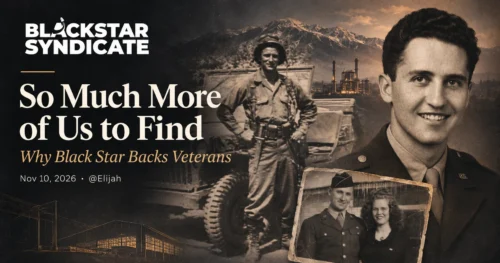
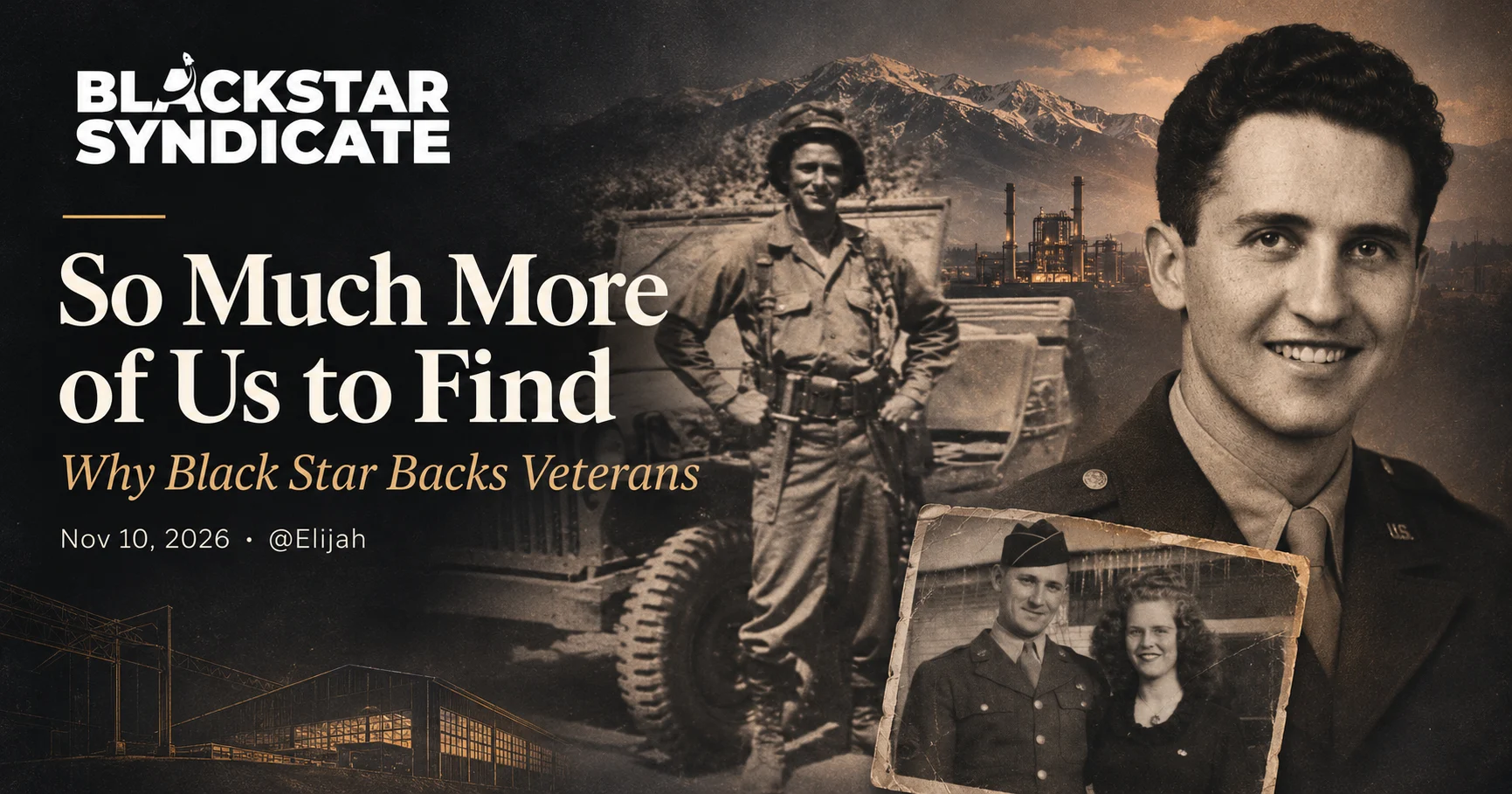
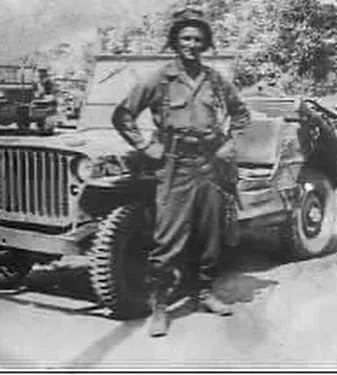
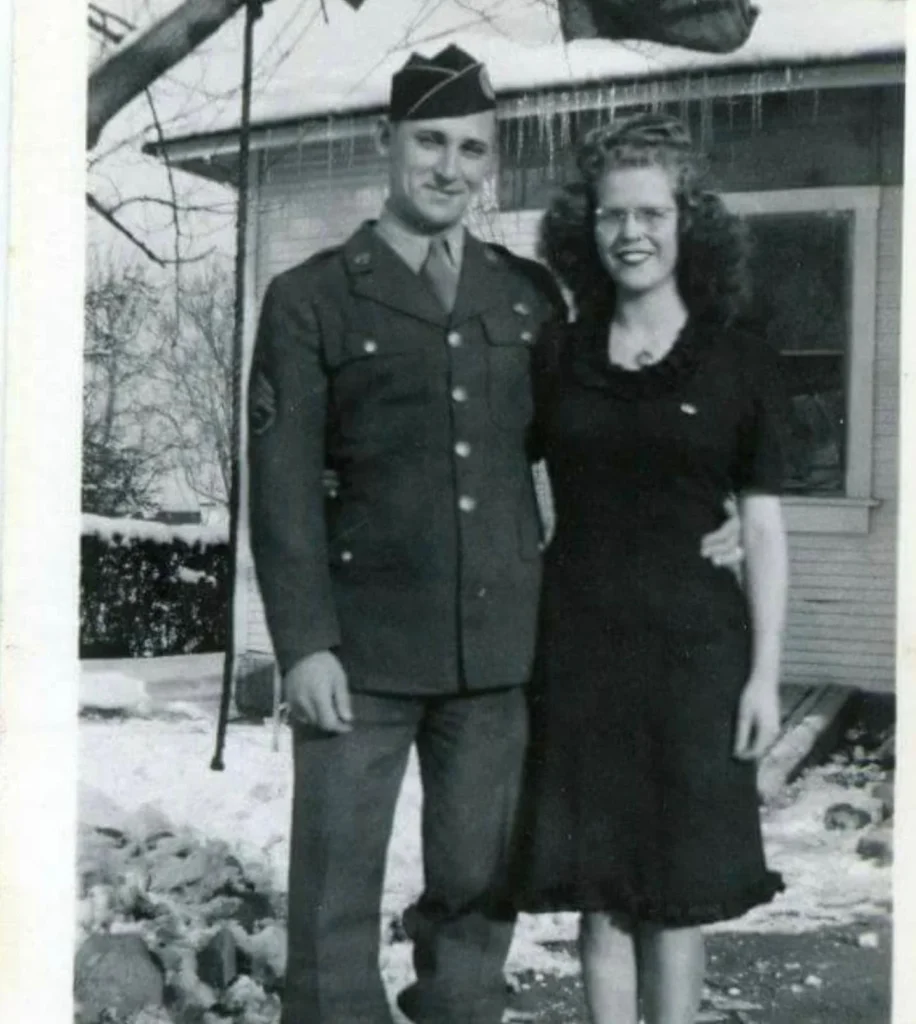
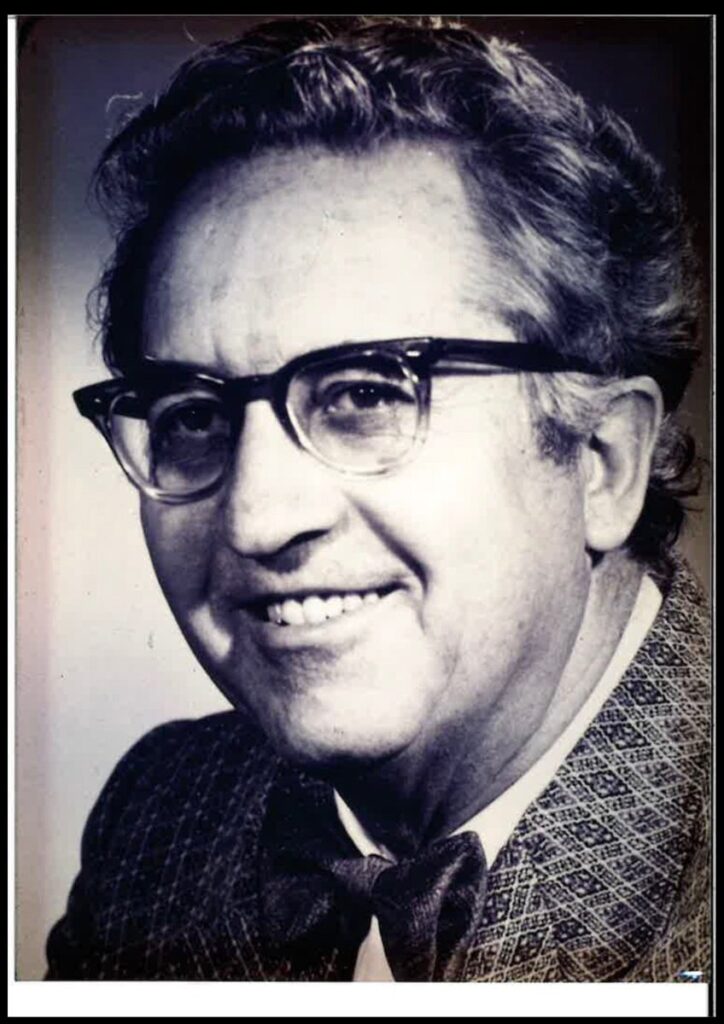
My grandpa Gil was 31 when he was drafted in Salt Lake City in March 1943, in the middle of World War II. He went in a private and came home a staff sergeant. He grew up in Chicago, lost his mother when he was three, and had a hard start in life.
After the war he stayed in Utah. He took up his father’s trade, plastered walls in Salt Lake City, and raised seven kids with my grandmother, Karna May. One of them was my mom.
So much of this country was built by men like Gil. They came home, picked up a trade and went to work plastering, framing, welding and machining. Many of them started the small shops and trade companies that still keep our communities running. Most never got much credit.
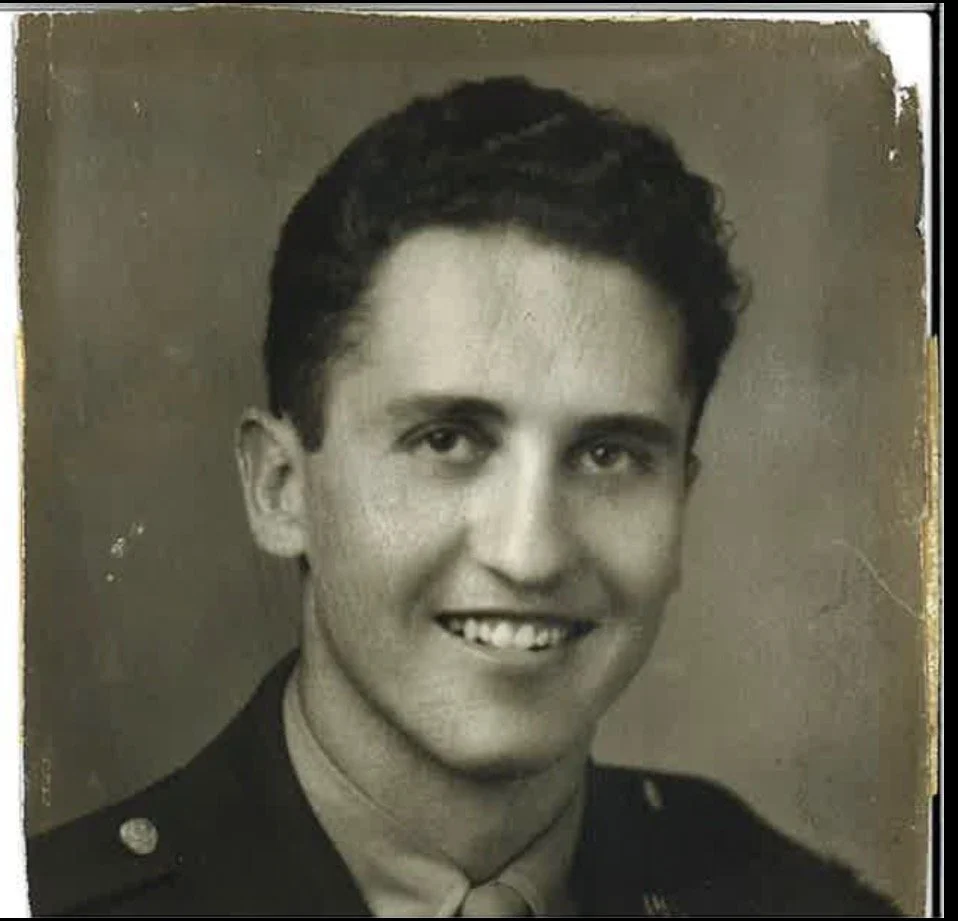
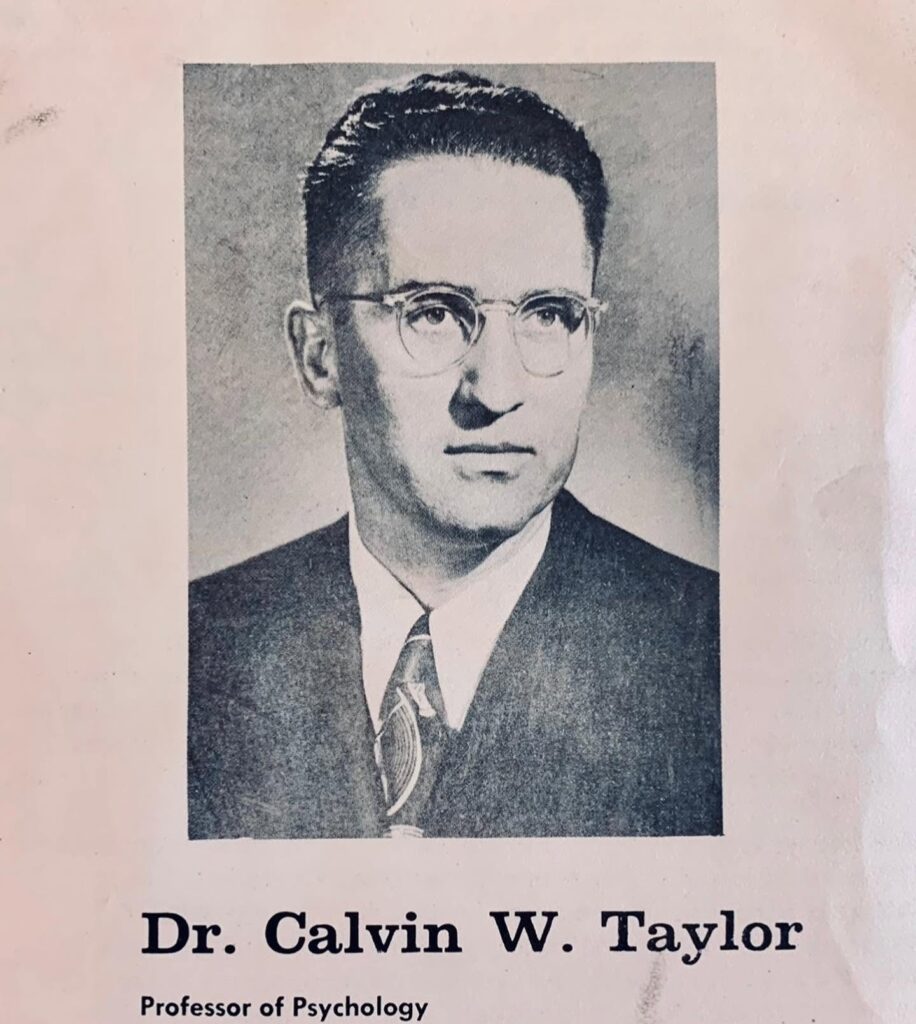
My dad’s father served from a different direction. Dr. Calvin W. Taylor entered the Army at Fort Douglas in June 1942, six months after Pearl Harbor. During the war he led the Army’s trade-testing program, which placed soldiers by the skills they already had so trained men could skip training they didn’t need. After the war he stayed in the Reserve, where he was assigned to the Army’s Human Factors Research Division, and retired as a lieutenant colonel. He spent the rest of his career at the University of Utah studying creativity and talent, on the belief that every person is gifted in some way. Black Star Leadership’s Talent & Leadership Map is built on his work.
One was a draftee who came home and plastered walls for a living. The other spent his life studying what people are capable of. Both answered when the country asked.
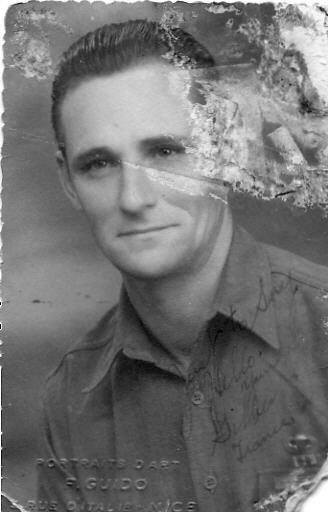
From the family album
So much more of us to find
I am not a veteran. I want to say that plainly, because most of what I understand about service I learned from people who wore the uniform.
The closest I came to that kind of training was football. My Pa played for the Dallas Cowboys in the ’70s. As I write this in 2026, that may not sound cool, but back then they earned the title of America’s Team, and if, like me, you had your father hand you a sports jersey when you were a kid, you’d understand why I love them through the good, the bad and the ugly. He coached too, and he drilled into me the same thing plenty of people who served say the military taught them: play for the name on the front of the jersey. You show up for your team and the people next to you.
Because of my grandfathers, and others in my family who served, I served a mission in England. It was one of my ways of giving back. While I was there, I heard a line I’ve carried ever since. In a 2014 devotional broadcast from BYU, Elder D. Todd Christofferson quoted Spencer W. Kimball: serving others in the right ways adds substance to the soul, and finding ourselves gets easier “because there is so much more of us to find.”
Christofferson knew something about service himself. After clerking for Judge John Sirica during Watergate, he did a year of active duty in the Army and eight more years in the Reserve, finishing as a captain.
What I got from them is a debt, and I’d rather pay it by showing up than by saying thank you once a year.
The men who kept serving
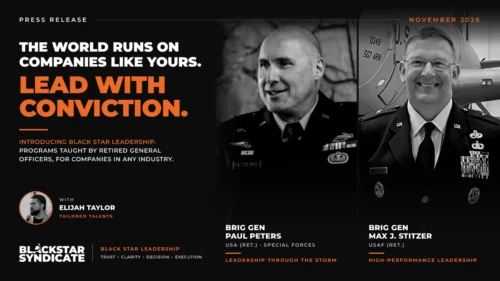
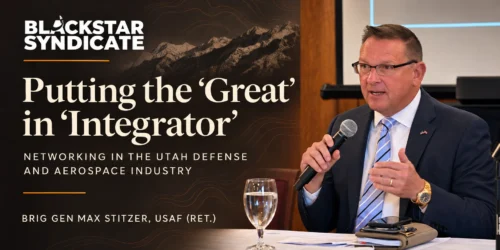
I see Kimball’s line most clearly in two men I work with every week. Brig Gen Paul Peters, USA (Ret.) commanded the 19th Special Forces Group (Airborne), headquartered here in Utah. Brig Gen Max J. Stitzer, USAF (Ret.) spent his career in logistics, readiness and the defense industrial base, including seven years at the Pentagon. Both retired. Both could have stopped.
They kept going. General Peters is on the team at Valkyrie Guard, which cares for special operators and their families. General Stitzer sits on the boards of the Major Brent Taylor Foundation and the Hill Air Force Base museum. Both have spent their retirements teaching civilian leaders on their own, passing what they learned protecting this country to people who never served. Black Star Leadership, which we just launched, is the newest place they do it. General Peters puts the core of it simply: “You are either building trust or eroding trust. There is no in-between.”
They spent their careers protecting people they would never meet, and they’re still at it. Spend an hour with either of them and you’ll see how much of them there is to find.
Everything is national security
When Black Star refocused this fall on companies whose work matters to national security, General Stitzer gave us the idea that holds it together. Energy, financial, physical and information security are all national security. The one he leads with: “Workforce security is national security.”
Once you see it that way, the map gets bigger. National security lives at Hill Air Force Base, where nearly 27,000 military, civilian and contract personnel keep aircraft flying, and which supports about 67,000 jobs across the region, according to the base’s 2024 economic impact statement. It lives in Springville, where IMSAR builds radar that flies on more than 100 manned and unmanned platforms. It lives at Spor Mountain, which anchors the Western world’s only fully integrated beryllium supply chain, a metal that goes into the F-35. Aaron Starks, who has led 47G, was the first person I heard put a number on it: aerospace, defense and cyber make up about 20% of Utah’s economy.
All of it runs on people like Gil. When I walk through a fabrication shop or a defense manufacturer here in Utah, I see the same kind of hardworking people, and I hear the same problem: there aren’t enough of them. They deserve more admiration and more help than they get. Veterans leaving the service today are some of the best people those shops could hire, and helping them get there is one of the most practical ways I know to protect this country.
Black Star works with companies in defense, aerospace, AI, supply chains and critical infrastructure. Workforce, education and veterans is one of our six areas of focus, on purpose. The industry we serve exists because people served, and it keeps running because veterans come home and build, hire, mentor and lead.
Who’s doing the work
Warrior Rising, founded in 2015 by retired Green Beret Jason Van Camp, helps veterans, military spouses and their families build real businesses. It runs Warrior Academy, Warrior University, one-on-one coaching and Business Shower pitch competitions, where winners can earn non-dilutive grants of $20,000 or more. The organization says it has helped over 60,000 military veterans start or accelerate their own businesses. I’ve supported them for several years, and their tagline says it better than I can: “Don’t thank a veteran. Back one.”
Valkyrie Guard exists for the men and women coming out of special operations who carried the heaviest weight over there and came home to carry it alone. Its work covers direct therapeutic support for operators and their spouses, education, and research into blast-induced brain injury and operator syndrome. In October, Black Star hosted a dinner in Ogden and the Mac’s Place concert to welcome them to Utah. I want our state to be the place that says yes.
True Vet Solutions helps veterans navigate VA benefits and the move out of service, so the support they earned actually reaches them. On December 9, True Vet will be in Las Vegas for the NFR Veteran & Military Appreciation Night. We care about what they’re building, so stay tuned for more from us alongside them in 2027.
The Defense Department’s SkillBridge program lets service members spend up to their last 180 days of service training with civilian companies. For a shop short on skilled people, that is about as direct as help gets.
How to back one
On November 18, fifteen veteran founders will pitch the companies they’re building to a panel of judges in Salt Lake City. The next night, three finalists pitch again on the Capitol Theatre stage, and the audience picks the winner. I’ll be in both rooms. Here’s how you can back them:
- Show up. Stand-Up for Startups is Thursday, November 19 at the Capitol Theatre. Doors at 6, show at 7, Brian Regan headlining. General admission is free.
- Give. Warrior Rising’s Six Club starts at $6 a month.
- Judge or mentor at a future Business Shower.
- Hire. If your company can bring on transitioning service members, look at SkillBridge.
- Point people to care. If you know a special operator or family who needs support, connect them with Valkyrie Guard.
Gil left behind a headstone that reads S SGT, a trade and seven kids. He came home, went to work and raised a family in this valley. I’m 31 now, the same age he was when he put on the uniform. He entered the Army on 3/4/43. The numbers on the back of my jersey growing up were 34 and 43.
I think about him every time I watch a veteran stand up in one of those pitch rooms and bet on themselves. The more we show up for people like him, the more of us there is to find. I’ve never left one of these rooms without a relationship worth keeping. Come see for yourself.
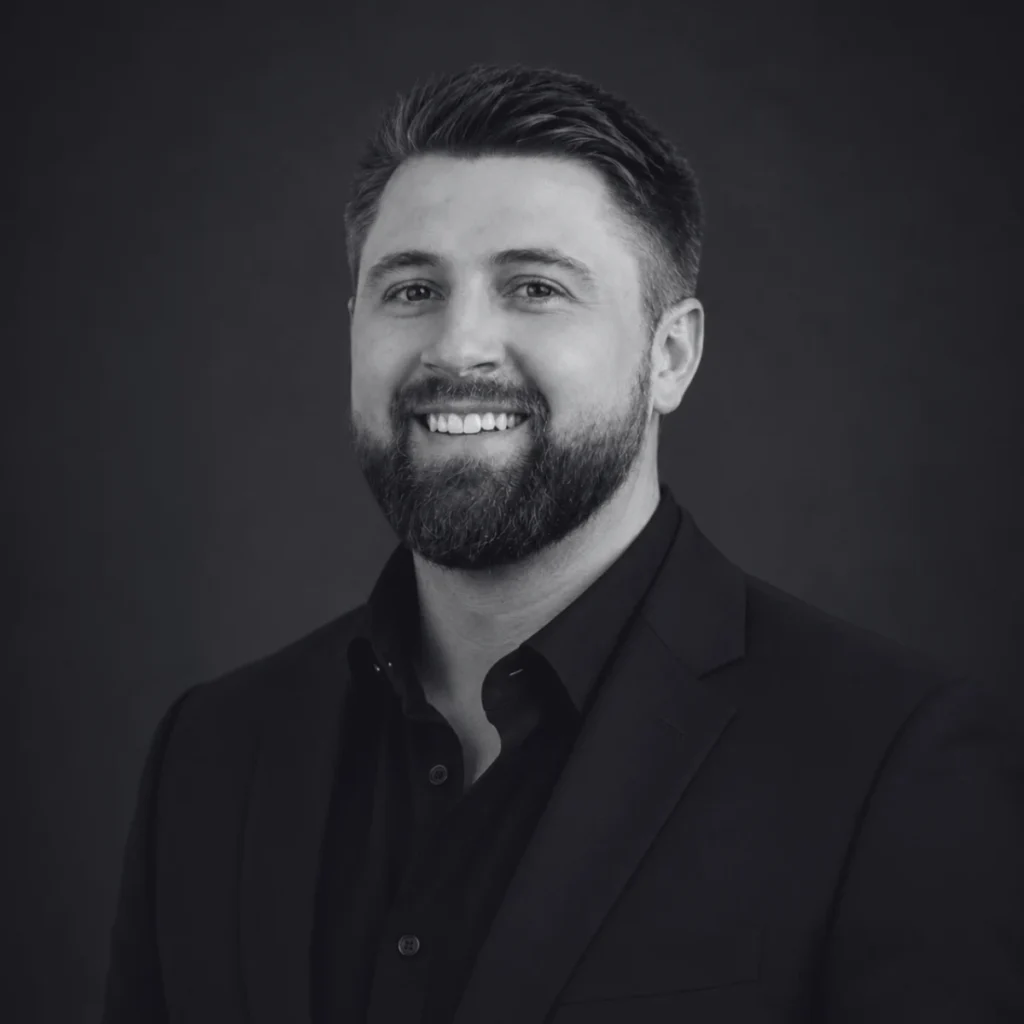
Elijah James Taylor
Managing Partner, Black Star Syndicate
Black Star Syndicate is a go-to-market advisory firm and is not a broker-dealer, law firm, or accounting firm. This newsletter is for informational purposes only.