The civilizations that shaped the modern world were not necessarily the strongest, wealthiest, or most technologically advanced. They were the most resilient.
The Roman Empire built roads, supply chains, and communication systems that allowed it to absorb shocks across vast territories. During World War II, Allied victory depended less on individual acts of heroism and more on the resilience of industrial production, logistics, intelligence networks, and manufacturing capacity.
In every era, resilience has been the hidden force that determines whether systems survive disruption or collapse under pressure.
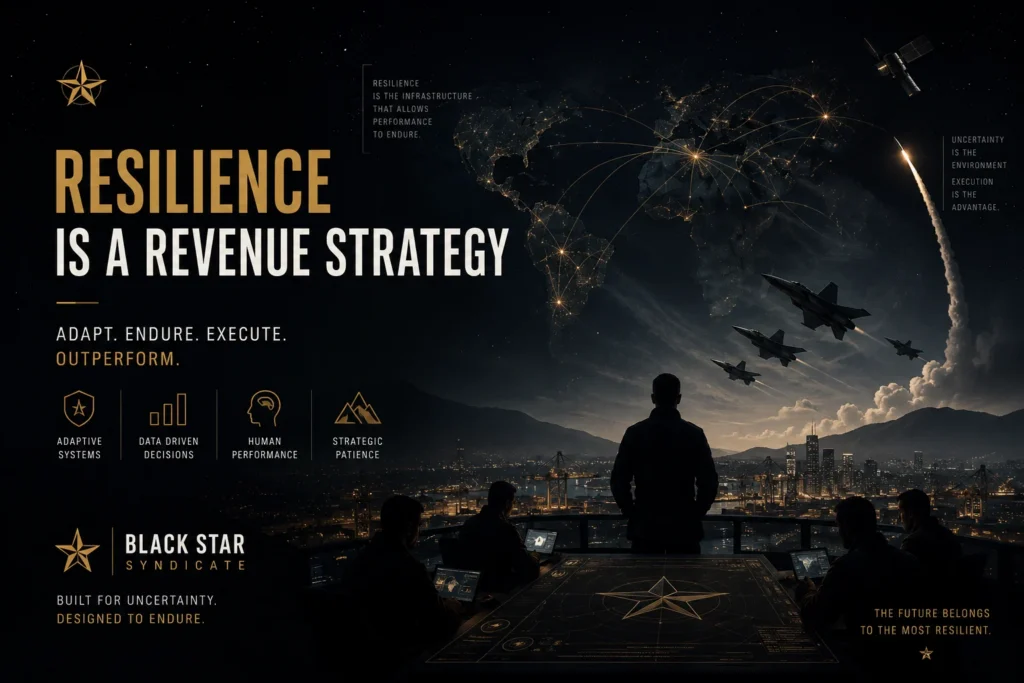
As I reflect on my own professional career and approach to leadership, resilience has been the foundation of every meaningful success (big or small) that I have experienced. Not intelligence. Not resources. Not perfect timing. The ability to adapt, recover, and continue executing when circumstances change unexpectedly has consistently been the difference maker. The same principle applies to organizations, industries, and nations. Resilience is not simply a desirable characteristic. It is the infrastructure that allows performance to endure.
The New Competitive Advantage
We live in a world defined by constant disruption. Supply chains shift overnight, technologies become obsolete in months, and AI is transforming entire industries in real time. Markets reward speed, but they punish fragility.
The organizations winning today are not those with perfect plans. They are those who can adapt faster than change occurs.
That is resilience.
Research across psychology, neuroscience, organizational science, and performance studies consistently shows that resilient individuals and organizations outperform their peers in uncertainty.
Resilience drives:
• Better decision-making under pressure
• Faster recovery from setbacks
• Higher employee engagement
• Lower turnover
• Greater innovation
• Stronger long-term financial performance
In practical terms, resilience is not about surviving adversity. It is about maintaining performance when adversity arrives.
Why Resilience Matters in Go-to-Market Strategy
Every company wants growth. Few recognize what growth actually demands.
A go-to-market strategy is not tested when conditions are ideal. It is tested when:
• A key client churns
• A competitor enters the market
• Funding conditions tighten
• A product launch misses expectations
• Economic uncertainty impacts buying behavior
The difference between organizations that scale and those that stall is often their ability to absorb these shocks without losing momentum.
The most effective revenue organizations build resilience directly into their operating model through:
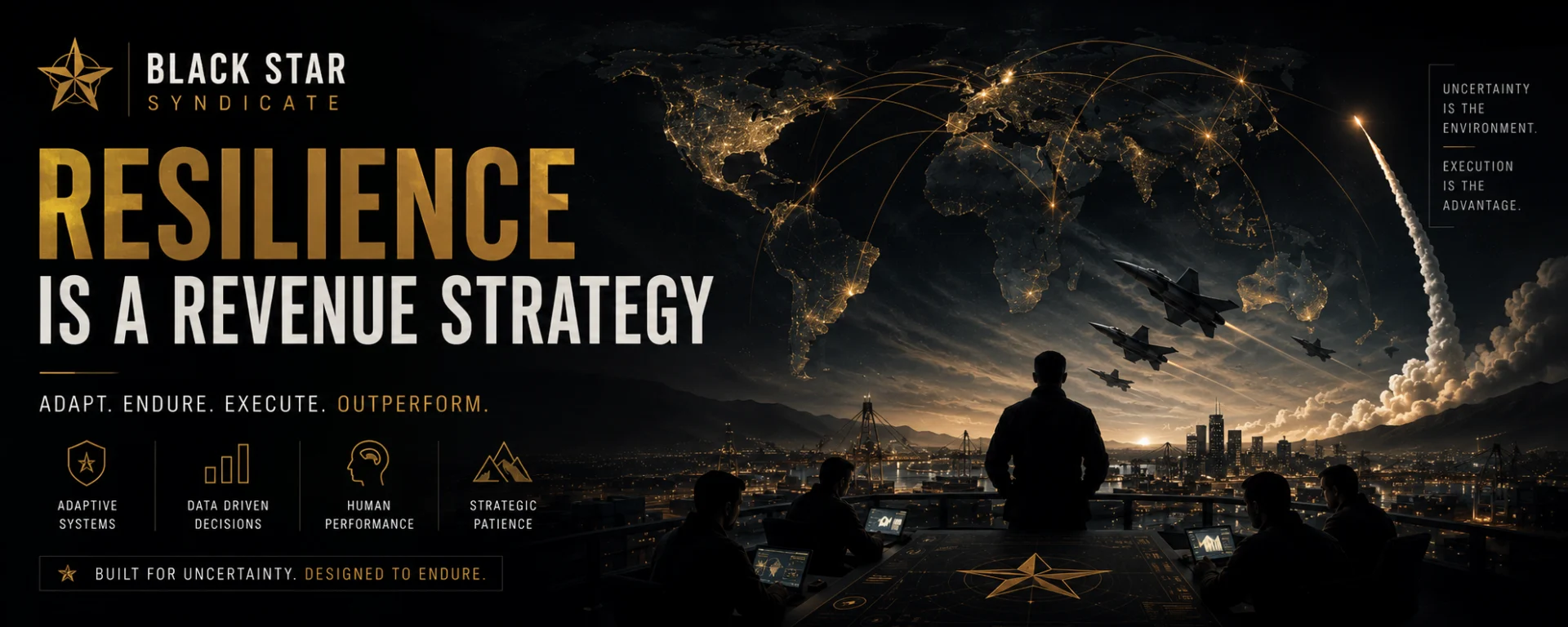
Adaptive Revenue Systems: Instead of relying on a single channel, customer segment, or market, resilient organizations diversify pathways to growth.
Data Driven Decision Making: They identify problems early, make adjustments quickly, and avoid emotional reactions to short-term volatility.
Human Performance Infrastructure: They understand that exhausted teams do not execute at elite levels.
Resilient organizations invest in the health, focus, and mental performance of the people responsible for growth. Just as professional sports organizations have integrated performance psychologists, recovery specialists, and mental performance coaches into their competitive infrastructure, high-performing companies are beginning to recognize that resilience is a strategic asset rather than a personal responsibility.
Clarity and Focus: They resist the temptation to chase every trend and instead build durable advantages that compound over time.
The Science of Resilience
Modern resilience research reveals something important:
Resilience is not a personality trait. It is a measurable and developable capability.
Studies show resilient individuals demonstrate stronger emotional regulation, better cognitive flexibility, and higher levels of adaptability when confronted with uncertainty.
At the organizational level, resilience is built through systems, culture, leadership, and visibility into emerging risks.
Just as companies track financial performance, pipeline health, and operational metrics, leading organizations increasingly measure indicators that predict organizational resilience before problems become crises.
The future belongs to organizations that understand performance and resilience are not separate disciplines.
They are the same discipline.
What This Means for Builders
The sectors represented inside Black Star Syndicate, including defense, aerospace, AI, energy, advanced manufacturing, critical infrastructure, and emerging technologies, operate in environments where uncertainty is the norm.
The companies shaping the future will not be those that avoid disruption. They will be those who learn to thrive within it.
Resilience is what allows a founder to navigate market shifts.
It allows a defense company to execute through procurement cycles.
It allows an operator to maintain focus amid complexity.
It allows an ecosystem to continue creating value when others retreat.
Technology creates capability.
Capital creates opportunity.
Resilience creates longevity.
And in the coming decade, longevity may prove to be the most valuable competitive advantage of all.
Looking Forward
As AI accelerates, geopolitical competition intensifies, and markets become increasingly dynamic, resilience will become one of the defining characteristics separating enduring organizations from temporary successes.
For me, resilience remains the cornerstone of leadership. Every strategy eventually meets resistance. Every organization encounters uncertainty. Every market experiences disruption. The leaders who endure are not those who avoid adversity, but those who continue creating clarity, momentum, and confidence when adversity arrives.
The question is no longer whether disruption is coming.
The question is whether your organization is prepared to perform through it.
Because the future will not belong to the strongest. It will belong to the most resilient.
Wes Young
Revenue Advisor – BlackStar Syndicate